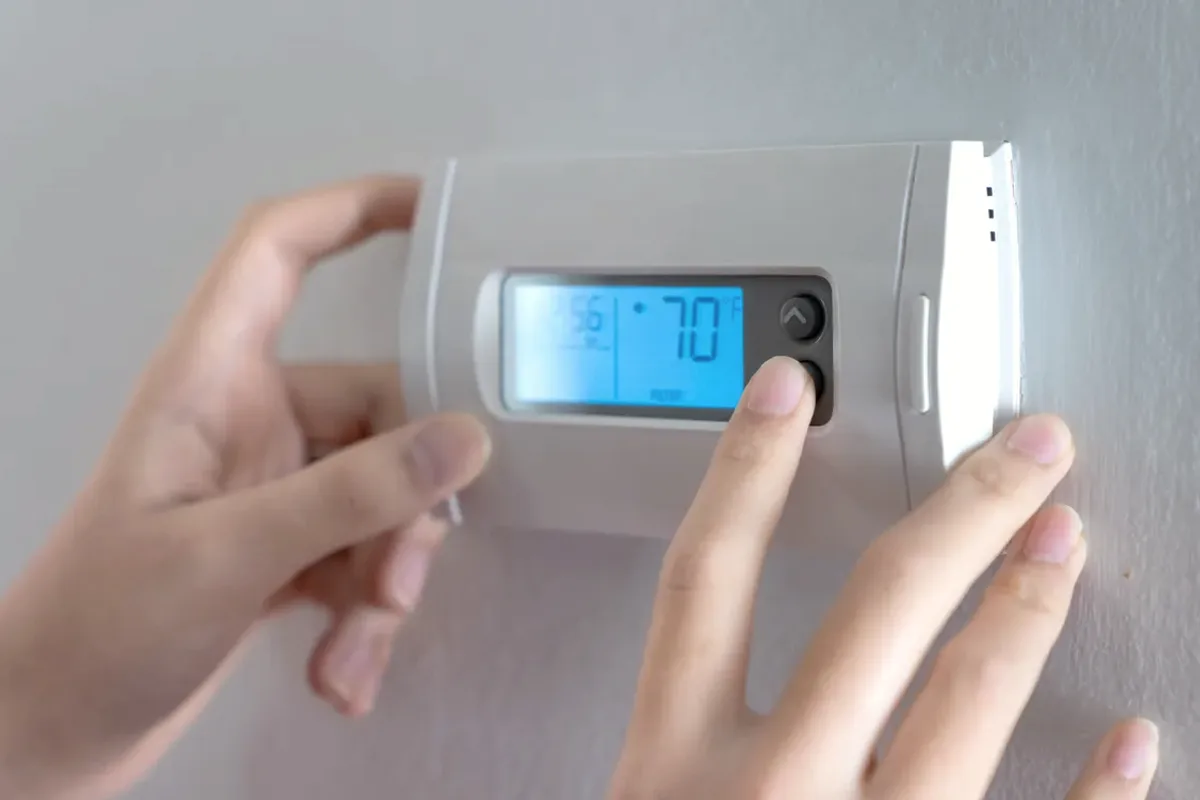
Request thermostat repair & replacement for a property in Milton. Include the equipment, the problem or planned work, and your location so the request can be reviewed.
How can thermostat compatibility be checked before repair or replacement?
A blank display, inaccurate reading, or HVAC system that does not respond may involve the thermostat, its wiring, its location, or the equipment it controls. Repair and replacement are different choices: a confirmed connection or sensor fault may be correctable, while an incompatible or failed control may call for replacement. For a programmable or smart upgrade, the existing system's control requirements and available wiring should be checked before choosing a model.
Assessment should identify the thermostat model, HVAC equipment type, wiring connections, displayed symptoms, and where the control is mounted. Testing can distinguish a display or sensor problem from a wiring fault or equipment communication issue. Compatibility matters because a replacement's terminals and control features must match the furnace, air conditioner, or heat pump it is intended to operate.
Blank displays, inaccurate readings, and control communication
Thermostat placement and sensor conditions
Programmable or smart controls and HVAC compatibility
Assessment and Scope
Questions for the Proposed Work
01
Trace the fault before replacing the control
A blank screen or incorrect temperature reading does not automatically mean the thermostat has failed. The assessment can consider its power source, wiring, sensor response, and communication with the HVAC equipment. If the heating or cooling system ignores a call, testing should establish whether the cause lies at the thermostat or elsewhere in the control circuit. Internal electrical diagnosis should be left to a qualified professional.
02
Check placement and sensing conditions
Direct sunlight, a nearby window, or air discharged from a supply vent can affect the temperature a thermostat senses. The location and observed difference between the displayed reading and room conditions can help identify a placement issue. Relocation or a compatible sensor arrangement may be considered only after checking wiring and equipment requirements. A control that reads poorly in one spot may not need replacement.
03
Match upgrades to HVAC compatibility
Programmable and smart thermostats differ in wiring needs, control functions, and compatibility with heating and cooling equipment. A heat pump, staged furnace, or combined system may require specific terminals or settings. Check the equipment and thermostat documentation before selecting an upgrade, including whether the existing wiring supports the intended features. Repair may remain appropriate when the control is compatible and the fault is limited.
Compare the next step
Identify whether a basement sensor would represent one room, a zone, or the entire home. Ask how its use changes central operation and compare that with independent equipment. The selected control strategy should match the intended lower-level occupancy without overheating or overcooling rooms governed by the same system. Specify the rooms represented by a proposed sensor and the hours they are occupied. Ask how the contractor will demonstrate the revised control behaviour in both the basement and the original thermostat area.
Thermostat wiring is not universal. Do not connect wires by colour alone or work on energized wiring; a compatible control must be configured for the equipment it serves.