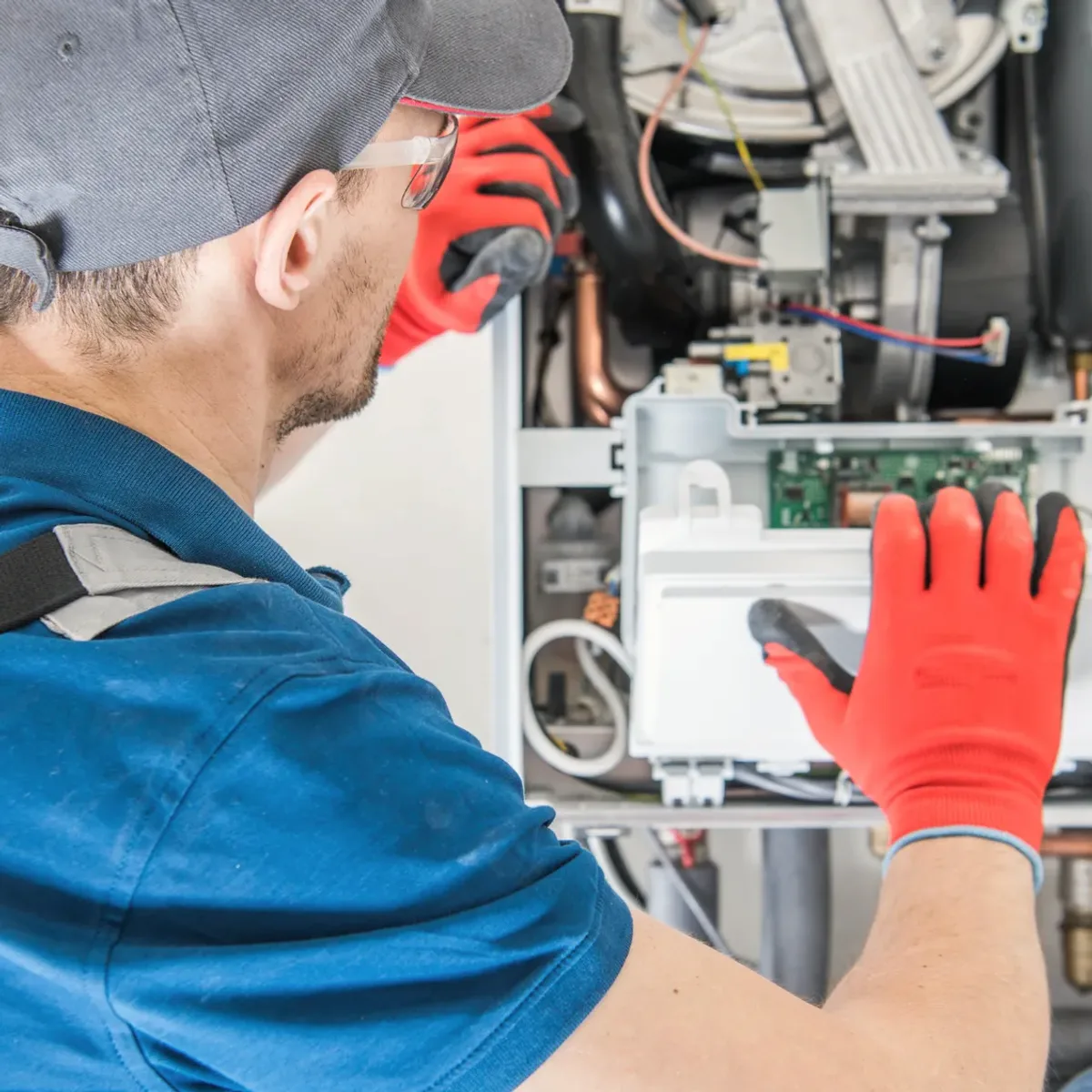
What checks distinguish an ignition problem from a circulation or pressure fault?
Boiler service depends on both the appliance and the hydronic distribution it serves. A natural-draft cast-iron boiler feeding radiators differs from a condensing boiler connected to in-floor loops in controls, venting, and operating requirements. No heat, a leak, or falling pressure may relate to ignition, circulation, expansion, or another fault. Inspection findings guide whether the need is repair, manufacturer-directed maintenance, or a replacement assessment rather than a generic boiler flush.
Record the boiler fuel and model, the type of emitters, pressure readings if displayed, leak locations, and which rooms or loops are affected. A professional inspection can distinguish burner or ignition faults from circulator, expansion-tank, air, or control problems. Venting and enclosure conditions also matter, particularly when comparing natural-draft equipment with a condensing model.
Ignition, circulator, expansion, and pressure faults
Natural-draft cast-iron versus condensing boiler systems
Radiator or in-floor distribution, fuel, and venting considerations
Assessment and Scope
Questions for the Proposed Work
01
Separate burner faults from hydronic circulation faults
A boiler that does not fire may have an ignition, fuel-supply, or control fault, while a running boiler with cold radiators or in-floor loops may have a circulation, air, valve, or distribution issue. Observations about burner operation and which emitters remain cold help direct testing. A dripping relief valve or falling pressure calls for professional assessment of the pressure and expansion conditions, not repeated topping up.
02
Match replacement design to emitters and venting
Natural-draft cast-iron boilers and condensing modulating models have different combustion and venting requirements. Radiators and in-floor loops also differ in water-temperature and control needs, so replacement selection should consider the distribution system as well as the boiler. If propane or oil is used, fuel compatibility and supply arrangements belong in the assessment. These distinctions define installation scope rather than assuming one boiler fits every hydronic system.
03
Base maintenance on condition and instructions
Maintenance should follow the boiler manufacturer's instructions and inspection findings, including checks of combustion, venting, controls, and hydronic components where applicable. A system flush is not automatic; the water condition, design, and observed circulation problem should determine whether it is appropriate. Corrosion, repeated pressure loss, or an aging component may prompt further evaluation, but maintenance findings and repair or replacement decisions should remain distinct.
Compare the next step
Explain whether the finished basement uses radiators, baseboard, or in-floor heating and whether it needs its own zone. Ask how the proposed emitter output and operating temperature fit the existing boiler and other zones. Preserve access to pumps, valves, and the appliance, and assign responsibility for concealed piping and finished-floor interfaces before work begins.
Leave fuel, combustion, electrical, and pressure-system work to a qualified contractor. Do not adjust safety devices or repeatedly add water to a system with an unexplained leak or pressure loss.