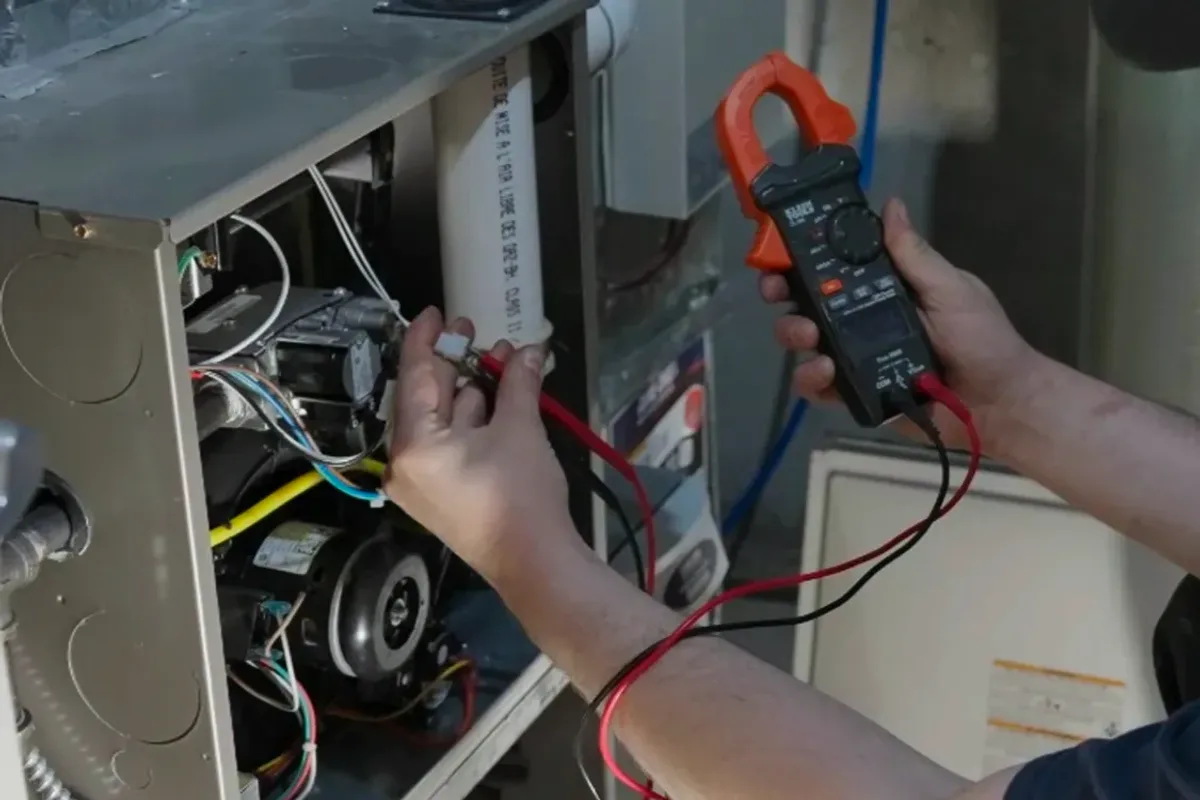
What should be checked when a furnace will not start or heat rooms evenly?
A furnace that will not start, produces uneven heat, or makes a new noise needs diagnosis based on its fuel, design, and observed symptoms. Older single-stage furnaces and newer modulating condensing models can have different controls, venting arrangements, and parts, so the model and fault history help define the work. Repair, maintenance, and replacement are separate decisions: the findings, condition of major components, and availability of compatible parts inform which option is appropriate.
A useful assessment records the furnace model, fuel, fault codes if displayed, and what happens during a call for heat. Inspection can distinguish ignition or flame-sensing faults from blower, airflow, control, or venting problems. Those distinctions matter because a failed component may be repairable, while damage to a major assembly can change the repair-versus-replacement decision.
Ignition, flame-sensing, blower, and control faults
Single-stage versus modulating condensing furnace distinctions
Maintenance findings and repair-versus-replacement decisions
Assessment and Scope
Questions for the Proposed Work
01
Separate ignition faults from airflow faults
A furnace that does not light may have an ignition, flame-sensing, fuel-supply, or control fault; a furnace that lights but leaves rooms cold points toward different checks. A qualified inspection can examine the sequence of operation and relevant components without repeated resets. Recording whether the burners start, stop, or never ignite helps narrow the diagnosis and avoids treating unlike symptoms as the same repair.
02
Use model and condition to guide repair decisions
Single-stage equipment and modulating condensing furnaces differ in controls, venting, and component design, so the model number and service history matter when identifying compatible parts. A sensor or igniter fault may leave the rest of the system serviceable. Major heat-exchanger damage, recurring failures, or obsolete parts can make replacement worth comparing with repair, rather than deciding from age alone.
03
Distinguish maintenance findings from a breakdown
Maintenance is not a substitute for repairing a confirmed fault. An inspection may review airflow, the filter, burners, thermostat response, and accessible components according to the furnace manufacturer's instructions. Findings such as restricted airflow or abnormal burner operation can guide corrective work. If a safety concern, combustion issue, or damaged component is suspected, leave inspection and repair to a qualified professional rather than opening the appliance.
Compare the next step
Show how the finished layout preserves access to filters, controls, and the appliance. Ask whether altered returns or enclosed spaces affect the reported fault. A service and renovation plan should distinguish heating performance from changes to the mechanical room, then record any distribution correction required for the occupied basement.
Leave burner, fuel, venting, electrical, and internal equipment work to a qualified contractor. Do not bypass a safety switch or repeatedly reset a furnace.